
REVIEW · KYOTO
Kyoto: Enjoy Sushi & Market Tour! Best for Family & Couple!
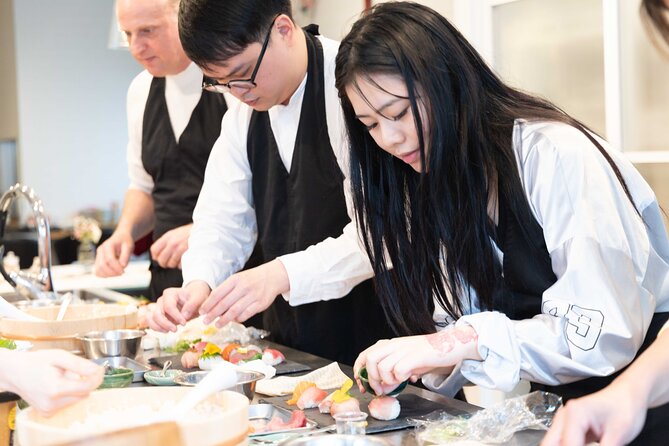
Kyoto’s sushi culture becomes much easier to understand when you make the food yourself. This two-hour class takes you to Nishiki Market for fish preparation, then brings you back to a professional kitchen to prepare vinegar rice, three sushi styles, dashi, and miso soup.
I like the practical focus: you learn dishes you can repeat at home, not just watch someone else prepare. I also like the small group limit of 10, which gives the class a friendly feel and leaves room for questions. The main drawback is price. At $77 per person, it is not a cheap meal, and one participant felt the instructor could have offered more hands-on attention for the cost.
Key points to know before booking
- Watch fish being cut at Nishiki Market: The market visit adds a real food-shopping element before the cooking begins.
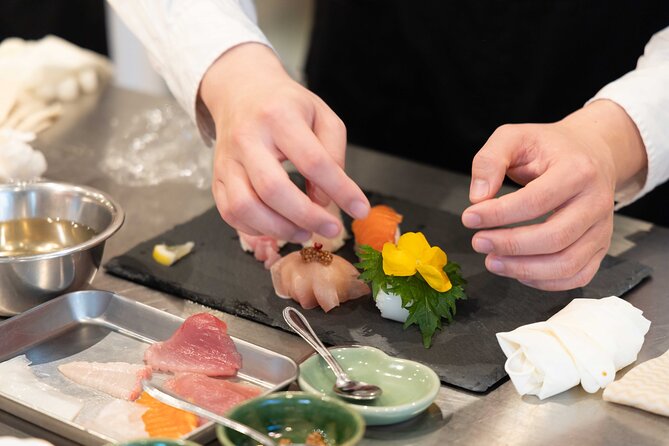
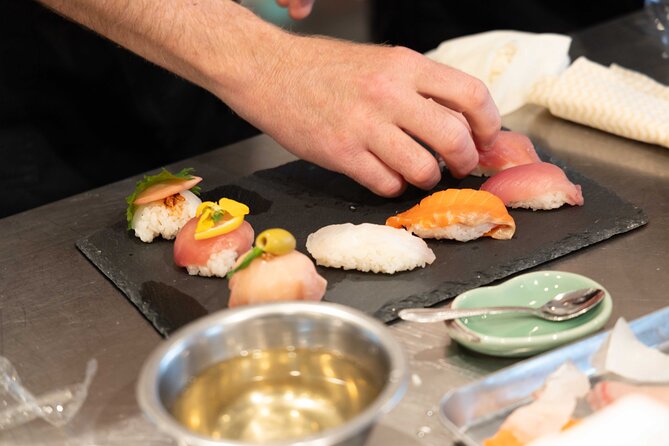
- Make three kinds of sushi: You prepare nigiri, temari, and temaki, each with a different shape and technique.
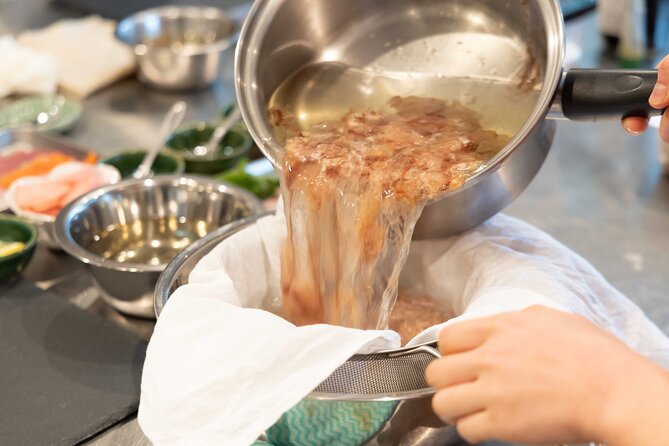
- Learn dashi and miso soup: The class includes tasting and comparing dashi before you make your soup.
- Finish with dessert and coffee: The meal includes a sweet ending, with Kyoto sake and beer available for an extra charge.
- Get seasonal Kyoto advice: A local Kyoto tourism expert shares ideas for sightseeing at different times of year.
- Choose a central location: The meeting point is about 10 minutes from Kyoto Station and 5 minutes from Shijo Station.
Why this sushi class works well in Kyoto
Many Kyoto food activities ask you to sit down and eat. This one gives you a role in the meal. You see fish preparation at Nishiki Market, learn how Japanese cooks build flavor, then sit down to eat food you have helped create.
That change of pace matters. You are not only sampling sushi as a finished product. You are learning why the rice needs vinegar, how different sushi shapes are formed, and how dashi supports the flavor of miso soup.
I also like the mix of structured teaching and personal choice. The instructor shows you the right methods, but you have some freedom to shape and arrange your sushi. That makes the class useful for a first-timer and still enjoyable for someone who already makes simple sushi at home.
The setting is practical rather than grand. You meet in front of a building with Salon Roll hair salon on the first floor. It is close to central Kyoto sights, so you can fit the class into a day that also includes Gion, Kiyomizu-dera, or the shopping streets around Shijo.
A few more romantic experiences around Japan worth a look
- Kyoto: Enjoy Sushi & Market Tour! Best for Family & Couple!
★ 5.0 · 2 reviews - Big Fat Indian Wedding, shopping & bazaar walking tour in Chennai
★ 5.0 · 15 reviews - Bali: Jimbaran Seafood Market Tour with Sunset Dinner
★ 4.0 · 7 reviews
Starting at Nishiki Market with the fish
The market visit gives the class its strongest sense of place. Nishiki Market is one of Kyoto’s best-known food streets, and this experience uses it as more than a backdrop for photographs.
You go together to select fresh fish and watch skilled vendors cut it. One particularly memorable part described by a family participant was seeing salmon prepared at the market. Watching the knife work helps you understand that sushi depends on more than a slab of fish placed on rice. Cutting angle, thickness, and care all affect the final bite.
The market stop also connects your meal to Kyoto’s everyday food culture. You see the ingredient before it reaches the plate, then use that food in the class. That link makes the cooking lesson feel less like a generic workshop.
Still, keep your expectations sensible. The information provided does not promise a full market tour, extensive shopping time, or a chance for you to cut the fish yourself. The point is to see the preparation and select ingredients with your instructor.
If you have a strong interest in Japanese food, this short visit may be the part you remember longest. If you mainly want a long cooking session, the market stop reduces the time available in the kitchen.
Learning vinegar rice, nigiri, temari, and temaki
The sushi lesson covers three different forms, which is a good choice for a two-hour class. You learn nigiri, the familiar hand-formed sushi with a topping; temari, a round ball-shaped style; and temaki, the cone-shaped hand roll.
Each form asks you to handle the rice in a different way. Nigiri requires a neat portion and careful shaping. Temari gives you room to focus on the look of the finished piece. Temaki is more relaxed and easy to customize. Together, these styles show you how much variety can come from the same basic ingredients.
The first essential step is making vinegar rice. This is the foundation of the meal, and it is where a short class can offer real value. Sushi rice should not be treated like plain steamed rice. The balance of vinegar and seasoning affects every piece you make.
The class is built around food you can prepare at home. You are not expected to become a professional sushi chef in two hours, but you should leave with techniques you can repeat for a home meal or a small party. One participant specifically valued learning the methods needed to prepare better sushi at home.
The artistic side is part of the fun. You are encouraged to create attractive sushi, so the class is not only about getting the shape technically correct. Families and couples can make the same dishes while still giving them their own look.
There is one important qualification. The level of personal attention may depend on the group and instructor. The maximum group size is 10, which is small by tour standards, but one participant felt the instructor was not engaged enough and wanted more direct, hands-on help. If you need constant coaching, tell the instructor early and ask questions as you work.
Comparing dashi before making miso soup
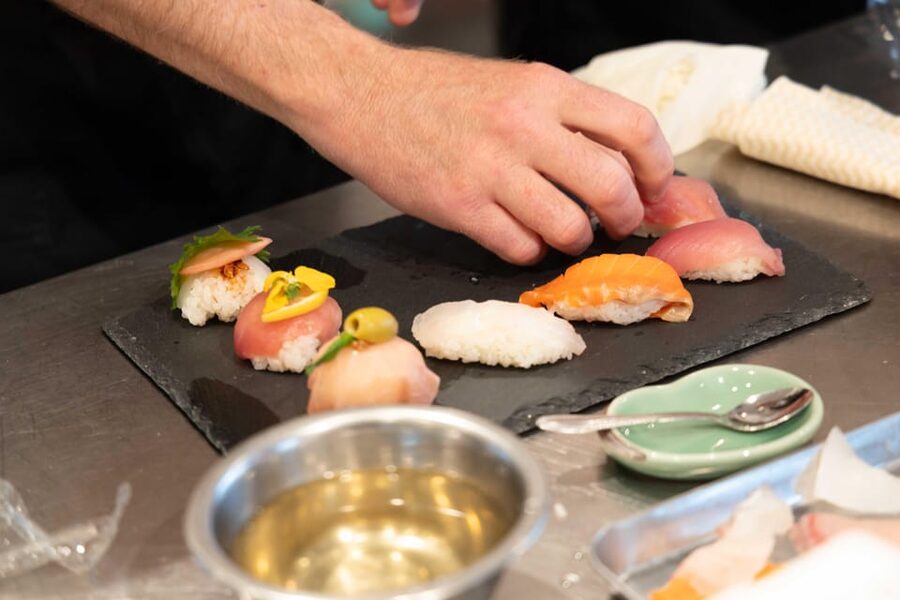
The miso soup section adds depth to what could otherwise be a sushi-only class. You learn how to make dashi, taste and compare it, and then use it in miso soup.
Dashi is a basic Japanese stock, but tasting it on its own helps explain why Japanese cooking can have such clear, layered flavor without heavy seasoning. The comparison is especially useful because it lets you notice the difference between a stock before and after it becomes miso soup.
You also get a better sense of how several small steps build the meal. The vinegar rice gives sushi its character, while dashi gives the soup its base. These are simple preparations, but they are central to the meal.
The class does not list every ingredient or every possible soup variation, so you should not expect a full lesson in regional miso types. What you do get is a focused introduction to dashi, tasting, and soup preparation.
For families, this part can be a welcome change from shaping sushi. It involves different senses and a different cooking method. For couples, it gives you another task to share before sitting down to eat.
Same place, a different kind of evening:
- Sagano Romantic Train & Arashiyama, Kiyomizudera, Fushimi Inari Taisha Day Tour
★ 4.5 · 171 reviews - Kyoto Kimono Rental mimosa |Kimono/Yukata Rental Couple Plan
★ 4.8 · 67 reviews - Private Dinner with a Geisha
★ 5.0 · 65 reviews - Private Dinner with Maiko and Geiko in Kyoto
★ 5.0 · 28 reviews
Sitting down to the meal you made
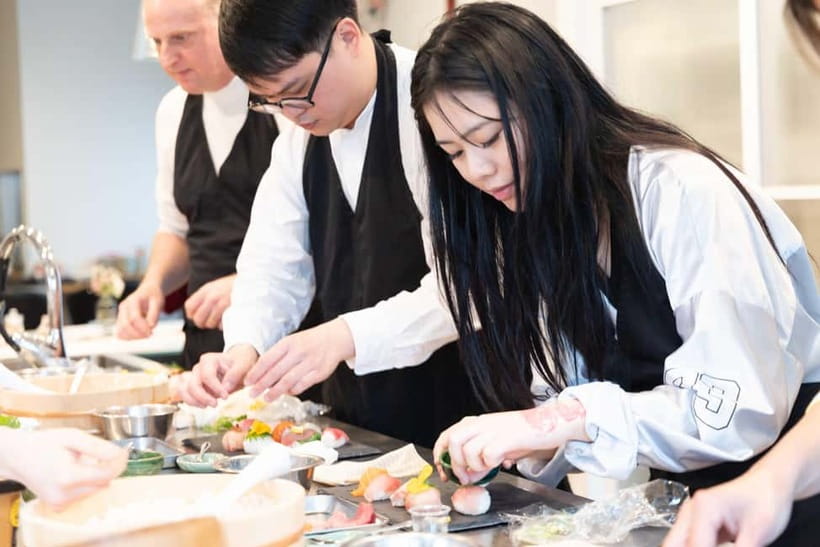
After the preparation, you eat nigiri, temari, temaki, and miso soup together. Dessert and coffee are included, so the $77 price covers more than the raw sushi ingredients and instruction.
The meal is also the social center of the class. Participants can talk while eating, and the relaxed conversation helps the experience feel less like a strict lesson. A family booking described the meal as including sake, green tea, and a homemade matcha dessert, though the exact drinks or dessert details may vary.
Kyoto beverages such as sake and beer are available for an extra charge. That is useful if you want to turn the class into a longer tasting, but you should factor in the added cost. Coffee and dessert are already included.
Do not book this as the best value if your only goal is to eat the largest possible sushi meal. You can spend less on a casual restaurant lunch. The value here is the combination of market access, instruction, food preparation, and a sit-down meal.
For me, the meal matters because you understand it differently after handling the ingredients. A temari sushi that looks simple on the plate has more meaning when you have shaped it yourself.
Kyoto sightseeing advice from a local expert
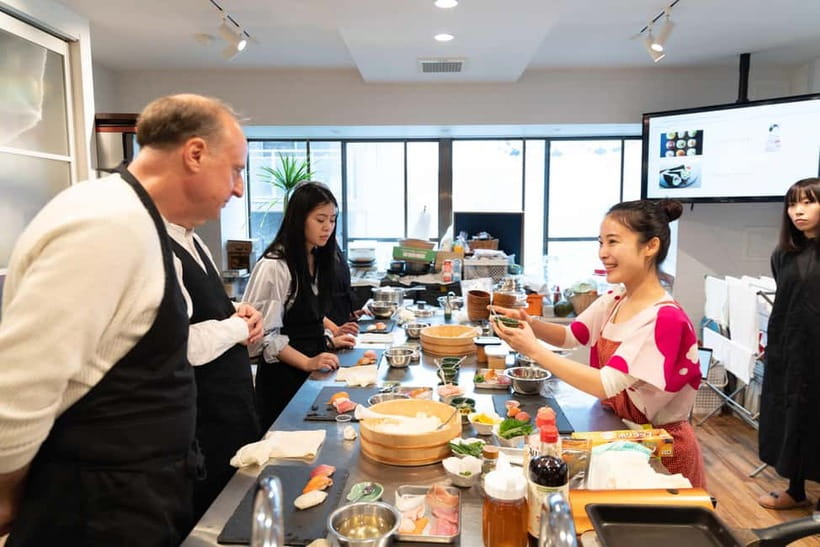
The class includes seasonal sightseeing information from a Kyoto tourism expert. This is a useful extra, especially if you are unsure how to plan Kyoto around the time of year you are visiting.
The advice is not described as a private itinerary or a full guiding service. Think of it as practical conversation during the class. You can ask about seasonal places to visit and gather ideas while you eat.
That timing is smart. You are already in Kyoto, and the instructor can put the food experience into a wider local context. You may not need another formal sightseeing lecture, but a few well-timed suggestions can help you make better use of the rest of your stay.
The value depends on how much you ask. Come with a short list of questions if seasonal planning matters to you. Ask about the kind of sights that fit your dates, then check the advice against your own schedule.
Location, timing, and group size
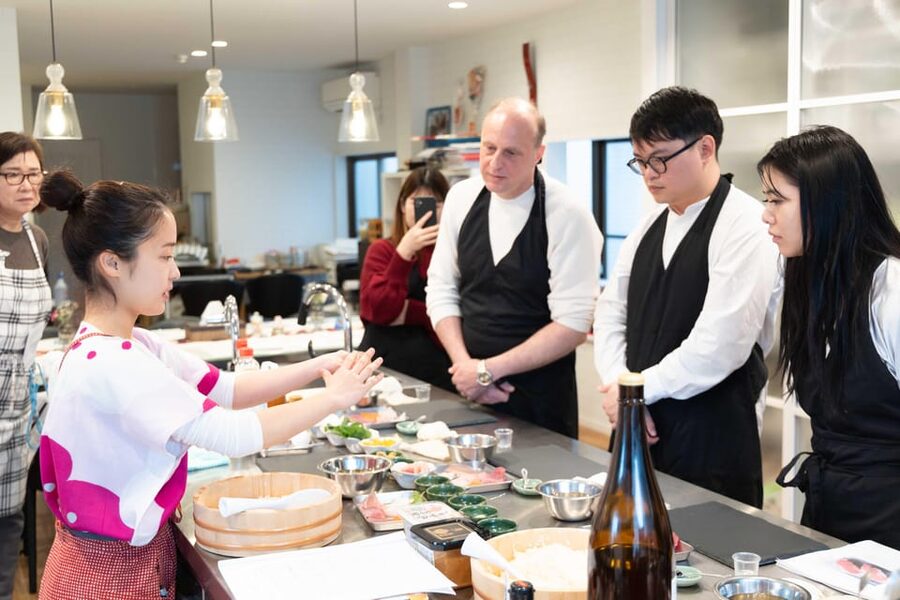
The activity lasts two hours. That makes it easy to place between major sightseeing stops, though you should allow extra time to reach the meeting point and continue to your next attraction.
The location is about 10 minutes from Kyoto Station and 5 minutes from Shijo Station. It is also close to Gion and Kiyomizu-dera, making it practical for a central Kyoto day.
The meeting point is in front of a building with Salon Roll on the first floor. Look for the hair salon rather than expecting a large tour desk or prominent market-style sign.
Classes are offered with English or Japanese instruction. The group is limited to 10 people, and the activity is wheelchair accessible. Those details make it a reasonable option for families, couples, and mixed-age groups, although you should still confirm any personal access needs when booking.
The small-group format is one of the better features. It is more personal than a large demonstration and gives you a better chance to ask about rice, shaping, or soup. At the same time, 10 participants is not a private class. If every person needs one-to-one support, the instructor may have to divide attention.
Who will get the most from the $77 price
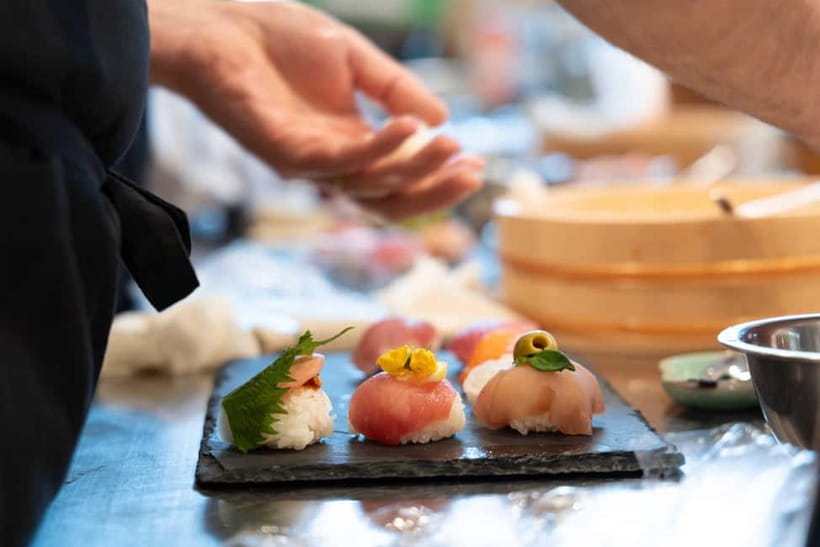
I would recommend this class most strongly to three kinds of people.
First, it suits families. The activities are varied, the meal comes at the end, and the three sushi styles give children and adults different tasks. One family booking described the experience as the highlight of a Kyoto visit, especially because it combined the market, fish preparation, soup, sushi, dessert, and drinks.
Second, it works well for couples who want a shared activity instead of another restaurant meal. You can compare your shaping skills, choose your own presentation, and enjoy the final meal together.
Third, it is a good fit for home cooks who want clear sushi basics. The class focuses on vinegar rice, sushi forms, dashi, and miso soup, all of which are more useful than a demonstration you simply watch.
I would be more cautious if you are a serious sushi student seeking advanced knife work or detailed fish training. The class shows fish cutting at the market, but the supplied details do not say that you receive a full knife-skills lesson.
I would also think twice if you dislike group instruction or expect nonstop attention from the teacher. The class has a strong record of positive experiences, but one participant found the instructor insufficiently engaged and considered the price high for the amount of personal instruction.
What the price includes, and what it does not
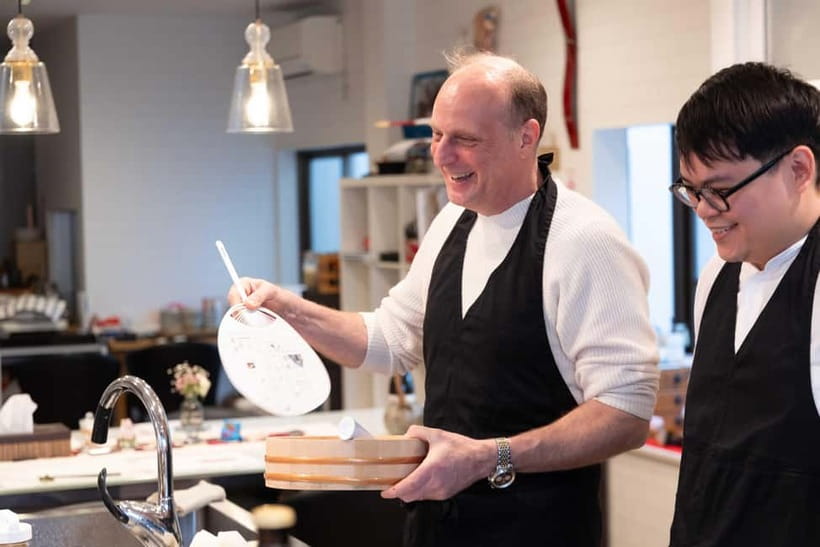
At $77 per person, the price includes the market visit, cooking instruction, vinegar rice preparation, three sushi styles, dashi tasting and comparison, miso soup, dessert, coffee, and seasonal sightseeing advice.
That is a fair package if you value the activity as a food lesson and not just a meal. You are paying for access to an instructor, ingredients, a professional cooking space, the market visit, and the chance to eat what you make.
Sake and beer cost extra. Smoking is not allowed indoors. The activity offers free cancellation up to 24 hours before the start time, and you can reserve now and pay later, which helps if your Kyoto schedule is still changing.
The best way to judge the price is to ask what kind of afternoon you want. If you want cheap sushi, choose a restaurant. If you want a hands-on cultural activity that ends with lunch or dinner, the cost makes more sense.
My call: book it for the hands-on Kyoto connection
I would book this class if you want to connect Kyoto’s food culture with something you can do yourself. The strongest elements are the Nishiki Market fish preparation, the three sushi styles, the dashi comparison, and the practical home-cooking focus.
It is especially suited to families and couples, and the central location makes it easy to fit into a sightseeing day. The small group and English instruction are helpful, while the included dessert and coffee round out the meal.
I would skip it only if you want a long market tour, advanced sushi training, or the cheapest possible meal. For everyone else, the class offers a useful mix of food, local conversation, and hands-on practice. Bring curiosity, ask for help as you work, and you should leave Kyoto with more than a full stomach.
FAQ
How long does the sushi and market experience last?
The activity lasts 2 hours.
How much does the experience cost?
The listed price is $77 per person.
Where do I meet the instructor?
Meet in front of the building with a hair salon called Salon Roll on the first floor.
How close is the meeting point to Kyoto Station?
The meeting point is about 10 minutes from Kyoto Station.
Is the activity close to Shijo Station?
Yes. It is about 5 minutes from Shijo Station.
What kinds of sushi will I make?
You will learn to prepare nigiri, temari, and temaki sushi.
Does the class include miso soup?
Yes. You will learn about dashi, taste and compare it, and make miso soup.
Is dessert included?
Yes. Dessert and coffee are included.
Can I order sake or beer?
Yes. Kyoto sake and beer are available for an extra charge.
Is the class offered in English?
Yes. Instruction is available in English and Japanese.
Just added around Japan
- Romantic Proposal Production Photo Video and Drone★ 5.0 · 2 reviews
- Tokyo Marriage Proposal Planning★ 5.0 · 5 reviews
- Couple Plan★ 5.0 · 2 reviews
- Osaka After Dark A Private Dinner Time Tour In Dotonbori & Namba★ 5.0 · 2 reviews
- Kyoto: Enjoy Sushi & Market Tour! Best for Family & Couple!★ 5.0 · 2 reviews
- Kyoto Private Kimono Photoshoot for Couple and Solo★ 5.0 · 4 reviews
- Kyoto Sagano Romantic Train in Arashiyama Bus Tour★ 3.0 · 6 reviews
- Handmade Wedding Ring Experience in Kyoto★ 5.0 · 3 reviews
Shopping Tours, compared.
Big Fat Indian Wedding, shopping & bazaar walking tour in Chennai
Read our review →
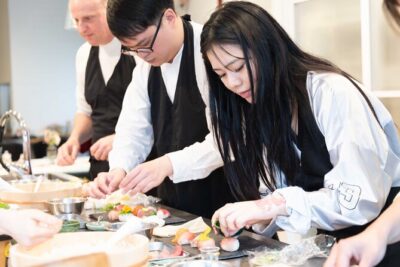
Enjoy Sushi & Market Tour! Best for Family & Couple!
Read our review →
Browse the lists this tour appears in