
REVIEW · KYOTO
Private Dinner with a Geisha
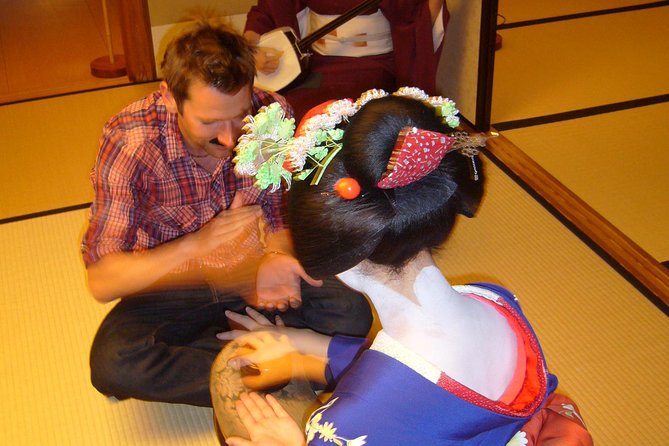
The rare part comes after the walk through Gion: you sit down with a maiko or geiko, ask about her training and daily life, and watch traditional dance, music, and games at close range. This is not a stage show with a distant audience. It is a small cultural meeting built around conversation.
I like the warm, personal guiding, especially from guides such as Mia and Mie, and I like that the evening puts the performance into context before you meet your host. The private tea house option can also be a fine splurge, with drinks included and a more intimate setting.
The main caution is the fixed dinner. Kaiseki is traditional and often seafood-based, and some diners found the food difficult or said dietary requests were not handled well. At $381.49 per person, you are paying mainly for access and personal contact, not simply for a meal.
Key points to know before you book
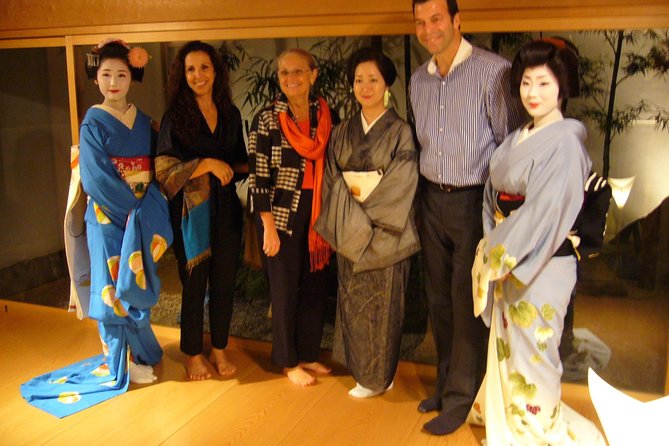
- A real maiko or geiko encounter: Ask questions about training, clothing, work, music, and daily routines through your English-speaking guide.
- Gion comes first: The evening begins near Minamiza Kabuki Theatre with a guided walk through Kyoto’s historic geiko district.
- The performance is close and informal: Expect dance, shamisen or singing, and traditional games rather than a long theater production.
- Kaiseki is part of the package: The meal features several courses, commonly including seafood, vegetables, and tempura.
- Private tea house means drinks included: Sake and beer are included with that option, while drinks are otherwise extra.
- Plan well ahead: The experience is often reserved about 38 days ahead and has a strict no-refund policy.
Meeting a maiko beyond the postcard image
Kyoto’s geiko world is easy to photograph from the outside and hard to enter. You may spot a maiko hurrying along a Gion street, but that glimpse tells you little about her training, work, or place in Japanese culture. This evening gives you time to ask those questions in a private room.
The terms matter. A maiko is an apprentice preparing to become a geiko. Geiko is the Kyoto term for a professional performer often called a geisha elsewhere in Japan. Your host may be one, the other, or both, depending on the option and evening.
The contact is the heart of this experience. You can ask about kimono, hair, lessons, songs, dances, and the path into the profession. Several families found the conversation especially engaging for teenagers, while another participant described learning how a maiko sleeps without disturbing her traditional hairstyle.
Your guide translates and keeps the exchange comfortable. That role is crucial because the maiko or geiko may not speak English. One family had a maiko who spoke no English, but still found the meeting worthwhile because the guide explained the setting and translated the interaction.
More Romantic Dinners in Japan:
- Private Dinner with Maiko and Geiko in Kyoto
★ 5.0 · 28 reviews - Tokyo: Private dinner with Geisha at a Member’s only Ryotei
★ 5.0 · 16 reviews - Tokyo Private dinner with Geisha
★ 5.0 · 10 reviews
Starting at Minamiza Kabuki Theatre at 5 pm
The meeting point is in front of the main gate of Minamiza Kabuki Theatre, facing Shijo Street, at 198 Nakanocho in Higashiyama Ward. This is a useful location near public transportation and an easy place to recognize, but give yourself time to find the correct side of the theater.
The listed start time is 5 pm. Since the evening includes walking, dinner, conversation, and entertainment, avoid scheduling another fixed activity soon afterward. The published duration is about three and a half hours, while the walking and party portion is also described as roughly three hours. Allow the longer estimate so you are not rushing.
Your group is booked as a private activity, but the practical group size can vary by option. One family booking found that the event itself included more people than the stated per-booking limit. If your party is large, confirm the arrangement before paying, especially if you are trying to reserve every place for family or friends.
Walking through Gion before dinner
The first part is a guided walk through Gion, Kyoto’s famous geiko district. Traditional wooden houses, narrow lanes, and working entertainment venues give the area its character, but this is not simply a sightseeing stroll. The guide explains the customs and separates the real profession from the myths often attached to it.
This introduction makes the dinner better. You arrive with some sense of what you are seeing, why the women dress as they do, and how the formal setting works. Guides Mia and Mie received especially strong praise for making the history clear, friendly, and easy to follow.
The walk lasts about 45 minutes in some versions of the experience. Wear comfortable shoes, and keep your group close. One larger group found it hard to hear the guide while walking, so smaller parties may get more from this portion than a crowded booking.
The walk also sets the right tone. Gion is a living district, not an outdoor theater. You should be polite, avoid blocking lanes, and follow your guide’s advice around private establishments. The operator states that the service may be refused to people who do not respect local traditions, and the cancellation terms do not provide a refund in that situation.
Entering the restaurant or private tea house
After Gion, you continue to a Japanese restaurant or tea house. The room is traditional, and the arrangement is designed for conversation rather than for watching a performance from far away.
The exact setting depends on the option selected. A casual dinner is different from the private tea house choice, and the meal may be a half or full kaiseki course. The private tea house option includes drinks such as sake and beer. In other versions, drinks are available for purchase and are not included.
The tea house upgrade costs more, but it is the option I would consider for a major occasion or a family determined to have the most private setting available. It is not automatically better for every diner. If your main goal is simply to meet a maiko, the less expensive format may still provide the central experience.
A few more romantic experiences around Japan worth a look
- Tokyo Private Dinner Cruise with Geisha and Matcha Bar Experience
★ 5.0 · 5 reviews - Osaka After Dark A Private Dinner Time Tour In Dotonbori & Namba
★ 5.0 · 2 reviews - Paris: Romantic Cruise with 3-course Dinner on Seine River
★ 4.3 · 2,295 reviews - Cairo: Nile Sunset Dinner Cruise, Show & Optional Transfer
★ 4.1 · 2,184 reviews
What the kaiseki dinner is really like
Kaiseki is a sequence of carefully presented Japanese courses, not one large plate of familiar restaurant food. Here, expect a traditional meal built around seafood, vegetables, and tempura, with the exact dishes determined by the restaurant and menu.
I would approach the meal with an adventurous appetite. Some diners found it delicious and memorable, while others found certain dishes barely edible. One person enjoyed trying unfamiliar flavors but wished there had been a menu explaining the ingredients.
That is the clearest food warning. If you are vegetarian, vegan, allergic to seafood, or simply selective, tell the operator when booking, but do not assume the fixed menu can be changed. Dietary requests were not always handled as expected, and one participant became ill after eating unfamiliar raw fish.
The dinner is not a good place to count on substitutions. It is part of the cultural setting, and you may be served ingredients you do not normally choose. If the maiko meeting matters more to you than the food, think of dinner as part of the access fee rather than the main reason to book.
Service can also vary. Most dining experiences were described as enjoyable, though one larger group found the restaurant slow and had to ask more than once for water. A smaller private arrangement may feel more relaxed, but the information does not guarantee a particular restaurant or service speed.
Conversation, music, dance, and traditional games
Once the meal is underway, the maiko or geiko joins the group. The guide translates questions and answers, allowing you to have a genuine exchange rather than simply watch a costumed performance.
You may learn about the long training process, the meaning of the clothing, the performer’s interests, and the daily demands of the profession. The tone can be surprisingly informal. Families described talking about pop culture, asking how the hairstyle works, and hearing about the route from maiko to geiko.
The entertainment usually includes traditional dance, singing, or a musical instrument such as the shamisen. The performance is beautiful, but keep your expectations realistic. It is generally a short part of a dinner gathering, not a full evening theater program.
The room may not have a large open area. One group found that the maiko had very little space to perform, and another described the dance as brief. That limitation is part of the trade-off for a private dinner. You gain closeness and conversation, but not the broad stage view of a formal show.
Games add a lighter note. Drinking games and simple traditional activities can bring the whole table into the evening. You do not need special skills, and the guide helps explain what to do. Alcohol is not compulsory, but the minimum drinking age in Japan is 20, and drinks are only included with the private tea house option.
Photography is part of the experience described by several families, but always follow the guide’s instructions and ask before taking pictures. The setting is personal, and respectful behavior matters more than collecting a large number of images.
The guides make or break the evening
The guide is not just there to lead you from one address to another. This person explains Gion, translates sensitive questions, manages timing, and helps you understand the etiquette of the tea house.
Mia is repeatedly singled out for her humor, warmth, English, and command of geiko culture. Mie is also described as friendly, well informed, and able to prepare visitors for the meeting. One guide had trained as a geiko but did not complete the full training, giving her an unusually close understanding of the profession.
That personal background can make a major difference. A good guide helps you ask better questions and keeps the conversation moving without turning it into an interview. If you are nervous, remember that your guide is there to bridge the cultural gap.
The guide also controls how much you hear during the walk. If the group is large, stand close and ask for clarification when needed. The walking portion is valuable, but it can lose impact if you are too far back to hear the explanation.
Is $381.49 a fair price?
At $381.49 per person, this is an expensive Kyoto evening. You can find less costly meals and public performances, so the price only makes sense if you value the private access, guide, translation, and personal meeting.
You are paying for several elements at once: a cultural walk, a traditional meal, the time of a maiko or geiko, a performance, and the work of an English-speaking guide. The private tea house option adds drinks and a more exclusive atmosphere.
I would not choose this for a routine dinner. I would consider it for a honeymoon, milestone birthday, family trip, or a visitor with a serious interest in Japanese arts. Group discounts may improve the value for a larger party, but confirm the final group arrangement before booking.
The strongest value comes from the conversation. If you only want to see a dance, a theater performance may offer more polished production for less money. If you want to ask personal questions and share a room with a maiko or geiko, this format gives you something a public show cannot.
Who should book this Kyoto evening?
I would recommend it to adults and families who enjoy cultural exchange, unusual food, and a slower evening. Teenagers can enjoy it too, especially when the guide keeps the explanations lively and the performer includes games.
It suits people who are curious and respectful. You should be ready to accept a traditional menu, follow local etiquette, and understand that the performance may be short. The experience is not designed for someone who wants a large stage show, flexible food choices, or a tightly timed dinner.
Children must be accompanied by an adult. Most people can participate, and the meeting point is near public transportation, but the walk and the traditional room may be less comfortable for anyone who needs a highly accessible format. Specific accessibility details are not provided, so ask before booking if that affects your plans.
Confirmation arrives within 48 hours, subject to availability. Since the experience is commonly booked about 38 days ahead and cannot be refunded or changed after purchase, I would not wait until the last few days of your Kyoto stay.
Should you book it?
Book this if meeting a maiko or geiko is high on your Kyoto wish list and you want context, conversation, and a meal in a traditional setting. The best parts are the guides, the rare access, and the chance to hear about the profession directly rather than only seeing it from a street corner.
Think twice if you have strict dietary needs, dislike unfamiliar seafood, or mainly want a long dance performance. For the right person, this is a memorable cultural evening. For everyone else, the price and fixed menu may feel heavy.
FAQ
Where does the experience begin?
It begins at 5 pm in front of the main gate of Minamiza Kabuki Theatre, facing Shijo Street, at 198 Nakanocho, Higashiyama Ward, Kyoto.
How long does the private dinner with a geisha last?
The experience lasts approximately three and a half hours. The walking tour and party portion is also described as about three hours, so allow the longer estimate when planning your evening.
Is dinner included?
Yes. The experience includes either a half or full kaiseki-style dinner, depending on the option selected. Drinks are extra unless you choose the private tea house option.
Are drinks included?
Drinks are included with the private tea house option, including sake and beer. In other versions, drinks are available for purchase. The minimum drinking age in Japan is 20.
Can I request a special diet?
You should provide dietary requirements when booking, but the dinner is a fixed traditional menu and changes are not guaranteed. Seafood and other unfamiliar ingredients may be included.
Is the activity private?
It is sold as a private activity for your group, though the number of people and exact arrangement can vary by option. Children must be accompanied by an adult, and most people can participate.
More Dining Experiences in Japan
- Budapest: Candlelit Dinner River Cruise with Live Music
★ 4.7 · 2,154 reviews - Budapest Danube River Candlelit Dinner Cruise with Live Music
★ 4.5 · 1,770 reviews - Marrakech: Agafay Desert Magic Sunset Dinner & Live Show
★ 4.7 · 1,442 reviews - From Marrakech: Agafay Desert Sunset Dinner with Live Show
★ 4.1 · 1,286 reviews
Just added around Japan
- Romantic Proposal Production Photo Video and Drone★ 5.0 · 2 reviews
- Tokyo Marriage Proposal Planning★ 5.0 · 5 reviews
- Couple Plan★ 5.0 · 2 reviews
- Osaka After Dark A Private Dinner Time Tour In Dotonbori & Namba★ 5.0 · 2 reviews
- Kyoto: Enjoy Sushi & Market Tour! Best for Family & Couple!★ 5.0 · 2 reviews
- Kyoto Private Kimono Photoshoot for Couple and Solo★ 5.0 · 4 reviews
- Kyoto Sagano Romantic Train in Arashiyama Bus Tour★ 3.0 · 6 reviews
- Handmade Wedding Ring Experience in Kyoto★ 5.0 · 3 reviews
Romantic Dinners, compared.

Candlelit Dinner River Cruise with Live Music
Read our review →
Budapest Danube River Candlelit Dinner Cruise with Live Music
Read our review →
Madrid Local Tapas Tour with Private Dinner and Bottomless Wine
Read our review →
Blissful Spa Escape & Romantic Candlelight Dinner
Read our review →
Private Dinner in the dunes in the Mleiha National Park
Read our review →
Amazing Romantic Dinner on a Spanish Galeon with Saxophone Music
Read our review →Browse the lists this tour appears in