
REVIEW · KYOTO
Kyoto: Enjoy Sushi & Market Tour! Best for Family & Couple!
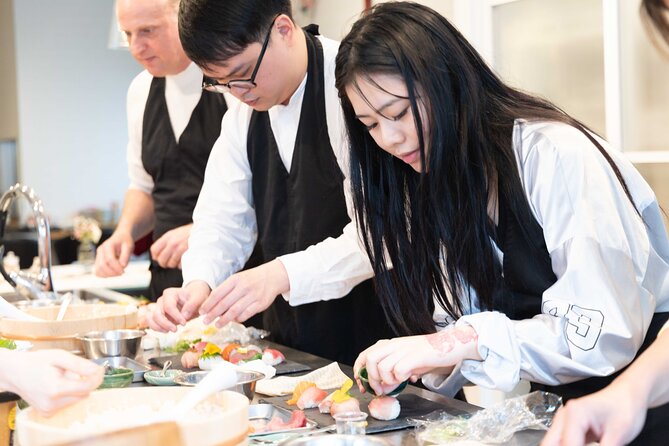
Making sushi you can repeat at home is the real appeal here. In 90 minutes, you’ll prepare nigiri, temari, and temaki, then sit down for dessert and coffee. The class also covers dashi, miso, tamagoyaki, and Kyoto seasonings.
I like the morning-bought fish and the small group limit of 10. I also like that the class sends you home with materials for making sushi again. The main drawback is that the 90-minute schedule is tight, so this is a focused lesson, not a long market visit or leisurely cooking seminar.
Key points to know
- Three sushi styles: Make nigiri, temari, and temaki, with guidance aimed at helping you repeat the techniques at home.
- Fresh fish bought that morning: Ingredients come from reliable vendors and are selected on the day of the class.
- More than a sushi lesson: You’ll prepare vinegar rice, dashi, miso soup, and Japanese rolled omelet.
- Dessert and coffee included: Handmade Kyoto-style sweets finish the meal, with takeaway available.
- Small group setting: The class accepts a maximum of 10 people, a useful limit for hands-on instruction.
- Dietary flexibility: Vegetarian menus and ingredient changes are possible if you request them ahead of time.
Three sushi styles in 90 focused minutes
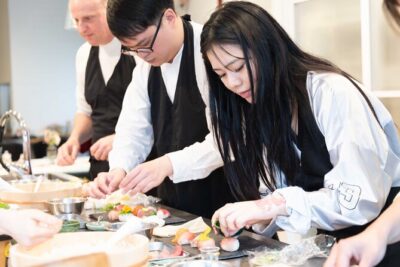
This Kyoto class is built around making food, not watching a demonstration from the back of a large room. You’ll work through the foundations of sushi and then eat what you prepare.
The 90-minute length matters. It fits neatly into a Kyoto sightseeing day, but it also means the pace is purposeful. You won’t have hours to linger over each technique, ask endless questions, or browse a full food market. Think of this as a compact kitchen workshop with a meal attached.
The class begins with an introduction to Japanese food culture. That gives the practical work some useful context. Sushi is not only about placing fish on rice. The balance of rice seasoning, soy sauce, miso, dashi, and texture helps explain why simple-looking Japanese food can take care to get right.
You’ll then make vinegar rice, the base for the sushi. This is one of the most useful parts to learn because the rice often determines how the finished piece feels and tastes. If it is too wet, too dry, too warm, or poorly seasoned, even good fish will not save it.
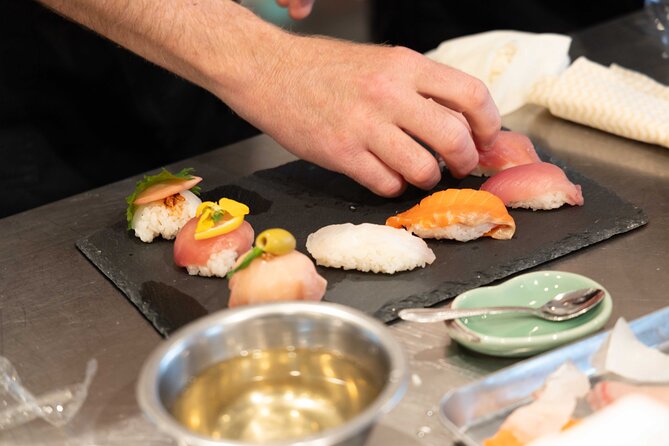
The sushi portion includes nigiri, temari, and temaki. Nigiri is the familiar hand-shaped rice topped with fish or another ingredient. Temari sushi is rounded and decorative, while temaki is hand-rolled sushi shaped like a cone. The three forms give you different ways to use the same basic ingredients at home.
That variety also makes the class a good fit for families and couples. You are not repeating one shape for the entire session. Each style offers a small creative challenge, and the temari pieces in particular let you focus on appearance as well as taste.
A few more romantic experiences around Japan worth a look
- Kyoto: Enjoy Sushi & Market Tour! Best for Family & Couple!
★ 4.8 · 20 reviews - Big Fat Indian Wedding, shopping & bazaar walking tour in Chennai
★ 5.0 · 15 reviews - Bali: Jimbaran Seafood Market Tour with Sunset Dinner
★ 4.0 · 7 reviews
Fresh fish and Kyoto seasonings
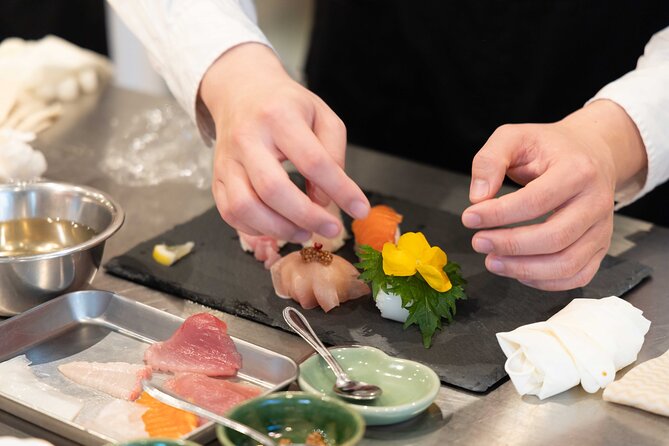
The fish is purchased on the morning of the class from reliable vendors. That detail does not turn the activity into a fish-market tour, but it does matter for a sushi lesson. You are working with ingredients selected for that day rather than relying on a fixed menu prepared far in advance.
The class also introduces traditional seasonings, including soy sauce and miso. These are familiar names, but tasting them in a guided meal can help you notice how they change the food. Soy sauce adds salt and depth to sushi, while miso brings a fuller, fermented flavor to soup and other dishes.
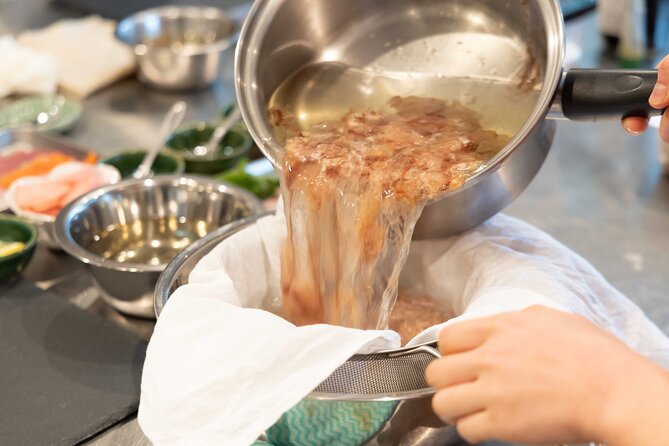
You’ll also taste and compare dashi. Dashi is a Japanese stock used as a base for many dishes, and it gives miso soup its savory character. Comparing flavors helps you understand what the stock contributes instead of treating miso soup as a single, ready-made mixture.
The lesson includes making miso soup, so you get a second use for the ingredients and techniques introduced earlier. This makes the class broader than a sushi-only session. If you want to learn a few building blocks of Japanese home cooking, the extra dishes add real value.
Tamagoyaki adds a useful second skill
Tamagoyaki, the Japanese rolled omelet, is another practical part of the class. It looks simple, but rolling the egg into neat layers takes a little control. Including it gives you a break from shaping rice and fish while adding a dish that works well for breakfast, lunch, or a home meal.
For families, this may be one of the easiest recipes to enjoy together because it does not depend on raw fish. It also gives anyone who feels unsure about sushi preparation another dish to focus on.
The supplied information does not promise that every participant will master each technique perfectly. That is worth keeping in mind. With a maximum of 10 people and only 90 minutes, you should expect clear instruction and hands-on practice, not professional-level knife training or a long lesson in fish preparation.
A meal that ends with Kyoto-style dessert
After the cooking, you’ll eat the sushi and other prepared dishes, then receive a handmade dessert typical of Kyoto along with coffee. Dessert is included in the price, and you can also take it away.
This is a pleasant finish because the class does not stop the moment the last sushi piece is shaped. You get time to enjoy the food and talk with the other participants. The format gives the activity a social side without requiring a full restaurant meal afterward.
Local drinks are available for an extra charge. That includes Kyoto beverages such as sake and beer. Alcohol is served only to people aged 20 or older, so younger participants can still take part in the food class but cannot order those drinks.
The included coffee and dessert help make the $85.64 price easier to assess. You are paying for instruction, ingredients, a prepared meal, dessert, and a small-group format, rather than simply buying a plate of sushi. If your main goal is the cheapest possible meal, this is not the right comparison. If you want to learn techniques and eat what you make, the price is more reasonable.
Same place, a different kind of evening:
- Sagano Romantic Train & Arashiyama, Kiyomizudera, Fushimi Inari Taisha Day Tour
★ 4.5 · 171 reviews - Kyoto Kimono Rental mimosa |Kimono/Yukata Rental Couple Plan
★ 4.8 · 67 reviews - Private Dinner with a Geisha
★ 5.0 · 65 reviews - Private Dinner with Maiko and Geiko in Kyoto
★ 5.0 · 28 reviews
What makes the take-home value useful
The strongest practical feature is that the lesson is designed to help you make attractive sushi at home. The aim is not simply to copy a chef for one afternoon. You’ll be shown ways to shape sushi that can work for a home party or a meal with family.
Materials for making sushi at home are also provided. The exact contents are not specified, so I would not assume you are receiving a complete kitchen kit. Still, having something to take home gives the class more life after your Kyoto stay.
That makes this activity especially useful if you enjoy food souvenirs that are not just packaged snacks. You may return with a technique, a few ingredients or tools, and the confidence to try temaki or temari sushi in your own kitchen.
The artistic side is worth noting too. Sushi can be neat and attractive without requiring restaurant-level perfection. The class encourages you to use your own creativity, which should suit couples who want a shared activity and families who like making food together.
Family and couple appeal
The experience is marketed for families and couples, and the format supports both. You share a kitchen setting, prepare food together, and then sit down to eat. The work is hands-on, so children who enjoy practical activities may find it more engaging than a standard sightseeing stop.
The supplied information does not give a minimum child age, so families should confirm suitability before booking if they are traveling with very young children. The class involves food preparation, and the schedule is fairly compact.
For couples, the appeal is simple: you have a joint activity with a clear result. You are not just sitting across from each other at a restaurant. You make several dishes, compare the results, and share a Kyoto-style dessert afterward.
The small group limit helps. Ten people is large enough for conversation but small enough to feel more personal than a big cooking event. It also gives the instructor a better chance to guide participants through shaping and rolling, though the short duration still calls for attention.
Dietary needs and ingredient planning
Vegetarian menus are available, and different ingredients can be arranged if you ask in advance. This is important because sushi classes often build the menu around fish, and last-minute changes may not be practical.
If you need a vegetarian menu or have another ingredient concern, contact the provider before the class rather than relying on a request at the door. The available information confirms that changes are possible, but it does not list every allergy substitution or dietary combination.
You should also remember that a vegetarian option may change the balance of the lesson. The class still covers the sushi forms, rice, seasonings, dashi, miso soup, and tamagoyaki, but the toppings and stock may differ from the standard menu.
Finding the class in central Kyoto
The meeting point is on the third floor at 284 Ōgisakayachō in Kyoto’s Shimogyo Ward, postal code 600-8095. The location is near public transportation, which makes it practical to pair with other central Kyoto plans.
The activity begins and ends at the same meeting point. That is useful when you are planning the rest of your day because you do not need to arrange a separate return transfer.
Give yourself enough time to find the building and reach the third floor. The address is specific, but a cooking class in a city building can be less obvious than a major station entrance or tourist landmark. Checking the route before leaving your hotel will make the start calmer.
The title includes the word market, but the stated program centers on the kitchen lesson. The fresh fish is bought that morning, yet there is no listed walking tour through a Kyoto market. Book this for the cooking and food culture, not for a guided market visit.
Booking timing, group size, and cancellation
The activity is often booked about 59 days ahead, which suggests that planning early is sensible if your Kyoto dates are fixed. The maximum group size is 10 people, so popular dates may fill before your trip.
Booking confirmation is normally sent at once. If you book within three hours of the start time, confirmation is sent as soon as possible and depends on availability. That makes a last-minute booking less certain.
You can cancel for a full refund up to 24 hours before the start time. A cancellation made less than 24 hours ahead is not refunded, and changes inside that period are not accepted. The cut-off follows local Kyoto time, so check the time carefully if you are arranging the class from another country.
Is $85.64 a fair price?
At $85.64 per person, this is not a casual snack stop. The value comes from the combination of instruction, fresh fish, several prepared dishes, dessert, coffee, and the chance to repeat the skills at home.
I would consider it good value if you want an activity that occupies part of your sightseeing day and gives you a meal at the end. The materials for home preparation strengthen the case, especially if you enjoy cooking after a trip.
The value is weaker if you want a long, relaxed food tour, a large tasting menu, or a full market walk. The 90-minute format is short, and optional sake or beer costs extra.
For a family, the total cost can rise quickly, so decide if everyone will take part in the hands-on cooking. For a couple, the shared activity and meal may make the price easier to justify than paying separately for a sightseeing attraction and lunch.
Who should book this Kyoto sushi class?
I would choose this class if you want to learn practical sushi forms, prefer a small group, and like the idea of eating what you prepare. It suits couples, families with children who enjoy cooking, and visitors who want a food activity that feels connected to Japanese home cooking.
The class is also a good pick for anyone who wants more than nigiri. Temari, temaki, dashi, miso soup, and tamagoyaki give you a wider set of skills than a single-recipe workshop.
I would skip it if your main goal is a market walk, an advanced chef lesson, or a slow multi-hour meal. You should also contact the provider early if you need vegetarian food or ingredient changes.
Book this Kyoto sushi class if you want a compact, friendly kitchen activity with fresh fish, useful techniques, and a sweet ending. The clearest benefit is that you can take the idea home and make sushi again, rather than leaving with only a photograph and a full stomach.
FAQ
Where does the sushi class meet?
It meets on the third floor at 284 Ōgisakayachō, Shimogyo Ward, Kyoto, 600-8095, Japan.
Where does the activity end?
The class ends back at the meeting point.
How long does the experience last?
The activity lasts approximately 1 hour and 30 minutes.
How many people can join?
The maximum group size is 10 people.
What types of sushi will I make?
You will prepare nigiri, temari, and temaki sushi.
Is dessert included?
Yes. Handmade Kyoto-style dessert and coffee are provided after the meal, and the dessert can also be taken away.
Are vegetarian menus available?
Yes. Vegetarian menus are available, and different ingredients may be possible if you request them in advance.
Are alcoholic drinks included?
Alcohol is not included in the stated price. Kyoto sake and beer are available for an extra charge, and alcohol is served only to adults aged 20 or older.
Can I cancel for a full refund?
Yes. You can receive a full refund if you cancel at least 24 hours before the experience start time. Cancellations and changes made less than 24 hours ahead are not accepted for a refund.
Just added around Japan
- Romantic Proposal Production Photo Video and Drone★ 5.0 · 2 reviews
- Tokyo Marriage Proposal Planning★ 5.0 · 5 reviews
- Couple Plan★ 5.0 · 2 reviews
- Osaka After Dark A Private Dinner Time Tour In Dotonbori & Namba★ 5.0 · 2 reviews
- Kyoto Private Kimono Photoshoot for Couple and Solo★ 5.0 · 4 reviews
- Kyoto Sagano Romantic Train in Arashiyama Bus Tour★ 3.0 · 6 reviews
- Handmade Wedding Ring Experience in Kyoto★ 5.0 · 3 reviews
- Arashiyama Walking Tour with Optional Sagano Romantic Train Ride★ 5.0 · 6 reviews
Shopping Tours, compared.
Enjoy Sushi & Market Tour! Best for Family & Couple!
Read our review →
Big Fat Indian Wedding, shopping & bazaar walking tour in Chennai
Read our review →

Browse the lists this tour appears in