
REVIEW · VIENNA
Vienna: Romantic Old Town 2-Hour Discovery Tour
Vienna’s old town is more than St. Stephen’s Cathedral and grand imperial streets. This two-hour private walk moves through Hoher Markt, the Greek Quarter, the old university district, and lesser-seen lanes where Gothic, Baroque, Rococo, and Art Nouveau buildings share the same block. It is a quick way to see how many different Viennas fit inside the historic center.
I like the focus on small details, especially the Anchor Clock, animal figures on facades, medieval paving, and back courtyards. I also like the chance to hear about traders, Jewish life, Greek merchants, and the Jesuit quarter instead of getting only the standard imperial story. The main drawback is pace: two hours is enough for an overview, but not enough to linger at every stop or enter every building.
- Hoher Markt begins the story with the Anchor Clock, old civic buildings, and Vienna’s early water supply.
- The Greek Quarter reveals a trading district shaped by merchants, Turkish conflicts, and Greek independence movements.
- Architectural contrasts come thick and fast, from Gothic towers to Baroque palaces and Art Nouveau houses.
- Myths appear in stone and metal, especially through animal figures on fountains and building fronts.
- The Jesuit quarter offers a quieter turn and a look toward the ornate Jesuit Church.
- A private guide makes the route flexible, with language choices and space for your questions.
Hoher Markt and the Anchor Clock
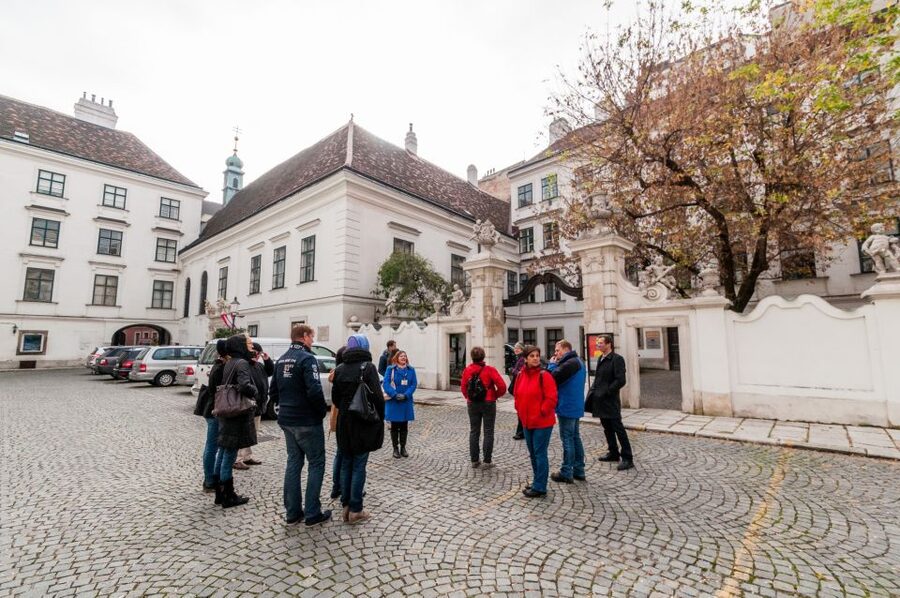
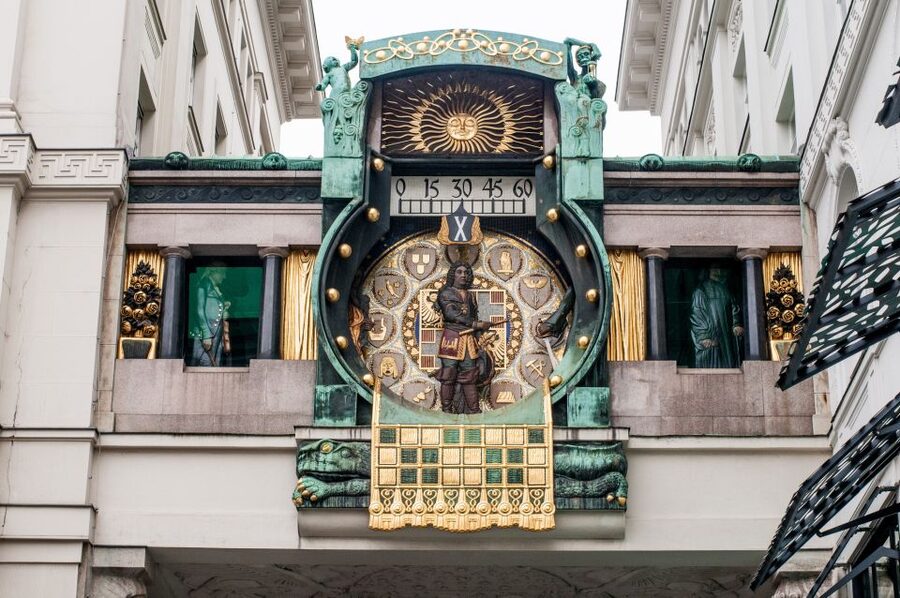
The tour begins at the Anchor Clock on Hoher Markt, a useful meeting point in the center of Vienna’s old town. Arrive 10 minutes early so you can find the clock without a rushed start.
Hoher Markt has long drawn politicians, architects, merchants, and tradesmen. That mix gives the square its purpose on this walk. You are not simply looking at one attractive building. You are tracing how power, commerce, religion, and public services shaped the city.
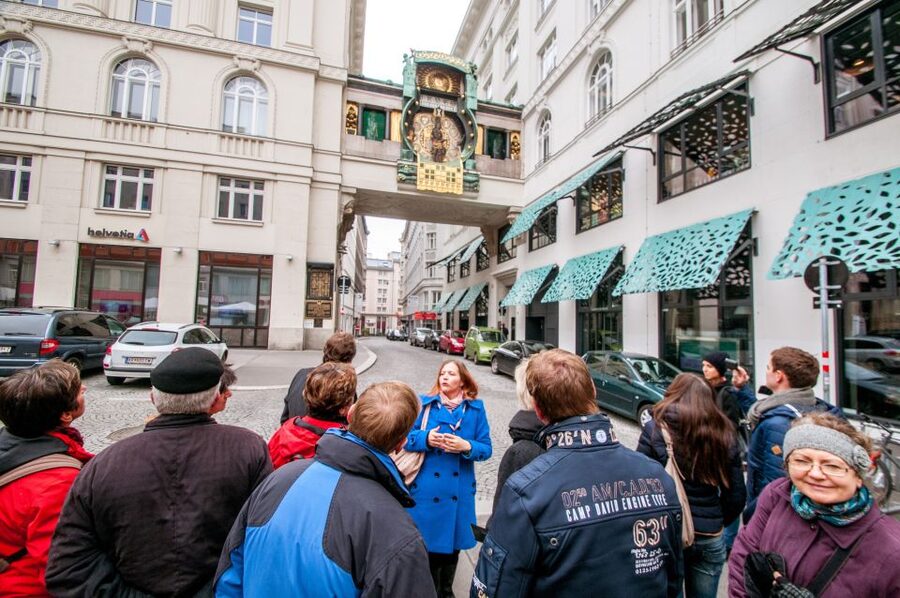
The Anchor Clock is the first obvious landmark. It is famous for its moving figures and historical surprises, so your guide can give you more to watch for than the clock face alone. The square also connects the tour to Vienna’s oldest building and its first public waterworks. These details help put daily life beside official monuments.
I like this opening because it gives you a clear frame for the rest of the walk. Vienna’s center was not created all at once. It grew through practical needs, private wealth, political ambition, and religious influence. Hoher Markt lets you see those forces working together in a small area.
The Greek Quarter beside the Danube channel
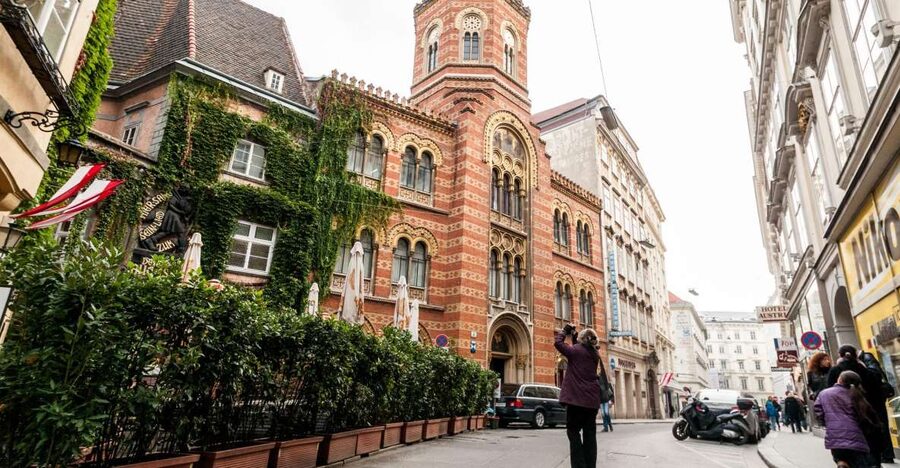
From Hoher Markt, the route explores the Greek Quarter, located along the innermost arm of the Danube River. The area was shaped by centuries of trade, and its story adds a useful change of tone after the civic history of Hoher Markt.
This district also carries the memory of conflict and political change. Turkish forces fought here, while Greek residents prepared their struggle for independence in Vienna. That makes the quarter more than a collection of narrow streets and old facades. It shows how Vienna was connected to events far beyond Austria.
The setting is described as hectic, and you should expect a city neighborhood rather than a quiet museum display. The reward is the density of clues. The quarter’s history appears in the streets, buildings, and religious connections around you.
This is one of the strongest parts of the experience for anyone who already knows Vienna’s major sights. You get a different view of the city, one built around merchants and immigrant communities rather than only emperors and palaces. The guide’s storytelling matters here, since the significance of the area is not always obvious from the outside.
A few more romantic experiences around the world worth a look
- Maui: 2 Hour Sunset Dinner Sail with Open Bar and Appetizers
★ 4.7 · 65 reviews - Heidelberg: City of Romance 2-Hour Walking Tour
★ 4.8 · 60 reviews - Private Romantic cruise with sparkling wine- 2-Hour- Lisbon
★ 4.9 · 52 reviews
Six ways to read Vienna’s old town
The guide organizes the walk around six themes. That structure is useful because the old town can otherwise feel like a blur of churches, fountains, grand houses, and side streets.
The first theme covers Romans, Jews, and traders, with Hoher Markt as the anchor. The second looks at the Greek Quarter and its trading past. The third examines architectural diversity. The fourth turns to myths and legends. The fifth focuses on the old university quarter. The sixth explores narrow streets and back courtyards.
The themes overlap, which is a good thing. A single street may reveal a religious connection, an architectural style, and a local legend at the same time. You are learning how to read the city rather than memorizing a list of dates.
A two-hour tour cannot explain every building in depth. Instead, it gives you a method for noticing Vienna. Afterward, you can walk through the old town with a sharper eye for entrances, fountains, facades, and changes in building style.
From Gothic towers to Art Nouveau facades
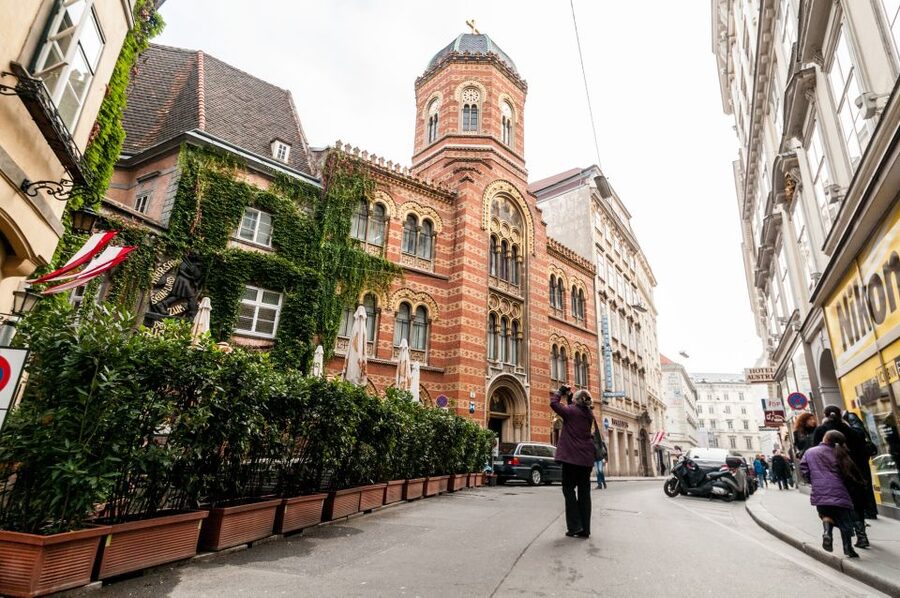
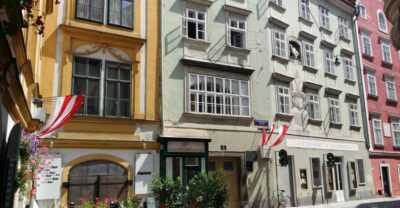
Vienna’s old town is a compact lesson in European architecture. The tour points out Gothic residential towers, medieval paving, Renaissance courtyards, Baroque city palaces, Rococo rows of houses, grand Gründerzeit buildings, and elegant Art Nouveau designs.
That range is a major reason to choose this walk. You do not need to visit a separate museum for each style. The buildings are part of the street itself, often placed directly beside one another.
Gothic elements can feel heavy and defensive. Renaissance courtyards suggest a more ordered private world. Baroque palaces show wealth and display, while Rococo houses bring a lighter decorative touch. Gründerzeit buildings reflect later urban growth, and Art Nouveau adds a cleaner, more modern look.
Your guide can help you compare these styles instead of treating them as isolated labels. Look up as you walk. The most useful details may be above eye level, where animals, ornaments, window frames, and sculpted figures reveal the purpose and taste of each building.
There is a small tradeoff. Architecture lovers may want more time at each facade than this route allows. If you want a technical study of Vienna’s buildings, a specialist architecture tour would be more suitable. If you want a readable introduction with plenty of visual variety, this route works well.
Myths, animals, and Vienna’s storytelling habit
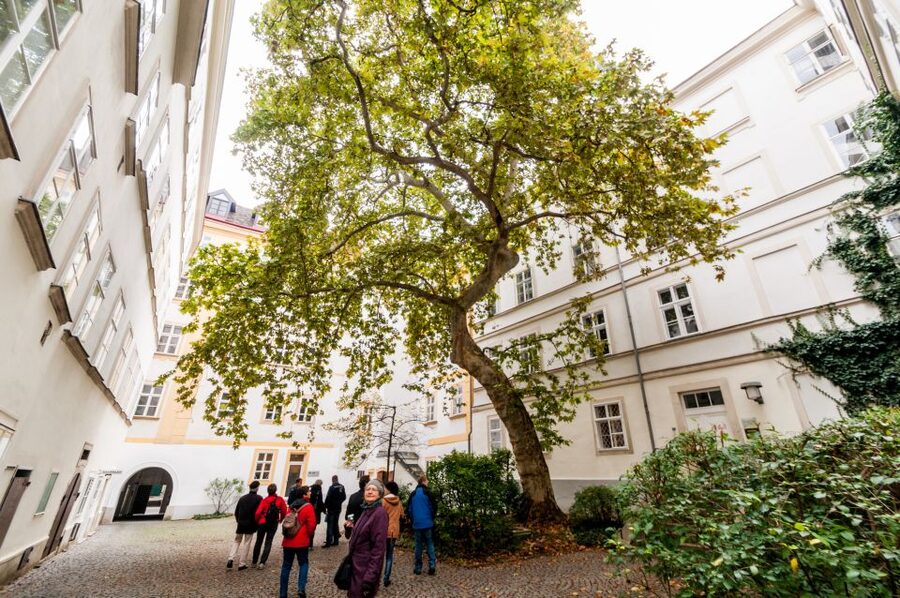
Vienna’s streets carry plenty of legends. Some stories explain unusual buildings, strange figures, or local customs. Others grew from attempts to explain events before modern science and historical research offered clearer answers.
The tour pays special attention to animals. You can find them worked into facades and fountains, where they may signal a warning, support a story, or simply add decoration. Your guide can separate legend from fact, though the two often continue side by side in the city’s popular memory.
I like this subject because it keeps the walk from becoming a string of dates. A story about an animal on a building can make you stop and look closely at a feature you might otherwise miss. It also gives families and younger participants something concrete to search for.
Keep in mind that legends are not historical proof. Their value is different. They show how people tried to make sense of their surroundings and how certain tales survived in the city’s public spaces.
Same place, a different kind of evening:
- Romantic Venice: 30 Minute Gondola Ride with Serenade
★ 3.5 · 2,742 reviews - Paris: Romantic Cruise with 3-course Dinner on Seine River
★ 4.3 · 2,295 reviews - Cairo: Nile Sunset Dinner Cruise, Show & Optional Transfer
★ 4.1 · 2,184 reviews - Marrakech: Agafay Desert Magic Sunset Dinner & Live Show
★ 4.7 · 1,442 reviews
The old university quarter and Jesuit Church
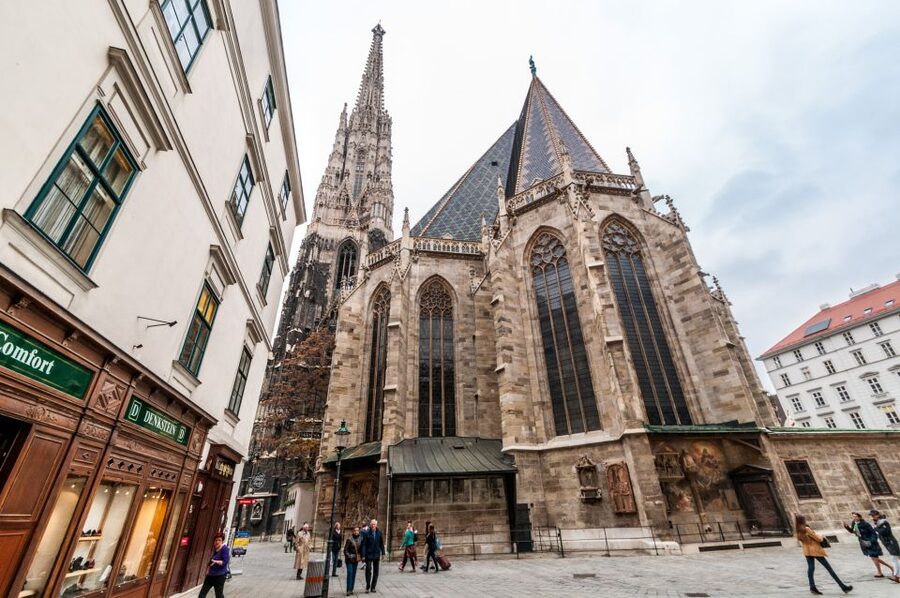
The route then reaches the old university quarter, a traffic-free section in the heart of the old town. Its quieter atmosphere creates a welcome contrast with the busier streets near Hoher Markt and the Greek Quarter.
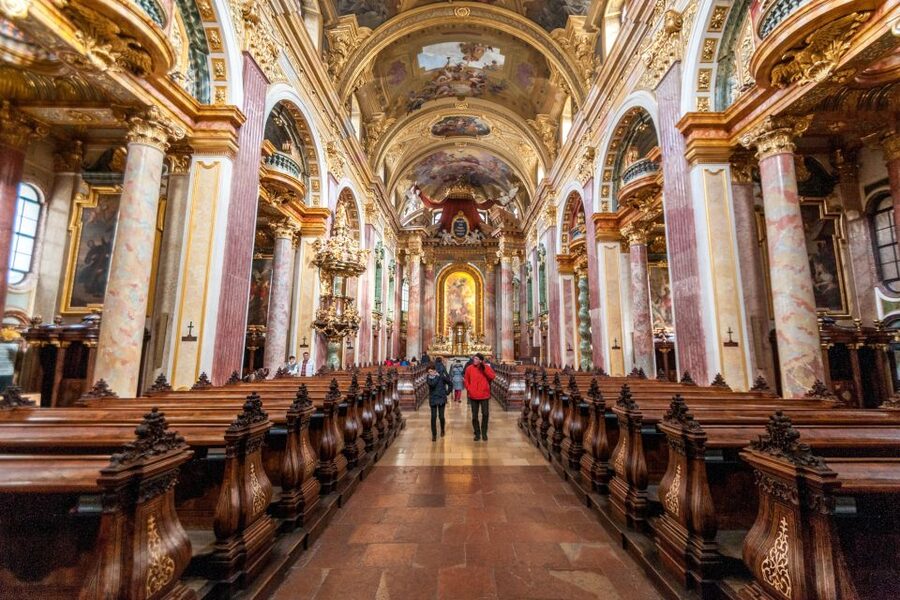
The Jesuit quarter is tied to the old university and to the strong role of the Church in Vienna’s public life. At the square’s fountain, you can look toward the interior of the Jesuit Church. The church is known for its intense Baroque decoration and for the way it reflects competition between painters and architects.
That competition is an interesting angle. Baroque churches were not only places of worship. They were also carefully planned visual statements. Architecture, painting, sculpture, and light worked together to shape the visitor’s response.
You should not expect a long church visit during a two-hour route. The value here is the explanation of what you are seeing and why the design matters. The guide connects the church to institutional power, artistic rivalry, and the university district around it.
This portion suits you if you enjoy understanding the purpose behind decoration. If you prefer long interior visits, you may want to return to the church later on your own, since the tour has several other subjects to cover.
Narrow lanes and back courtyards
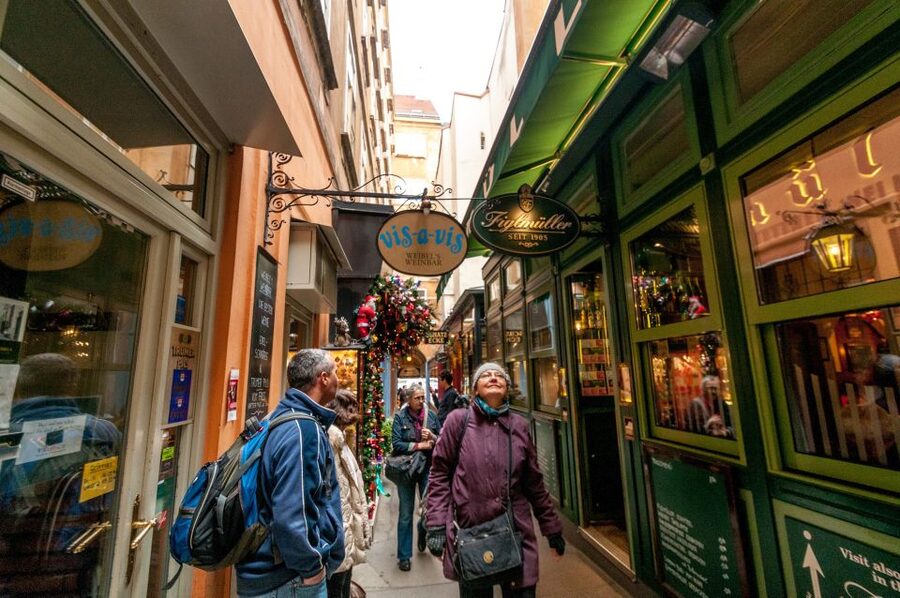
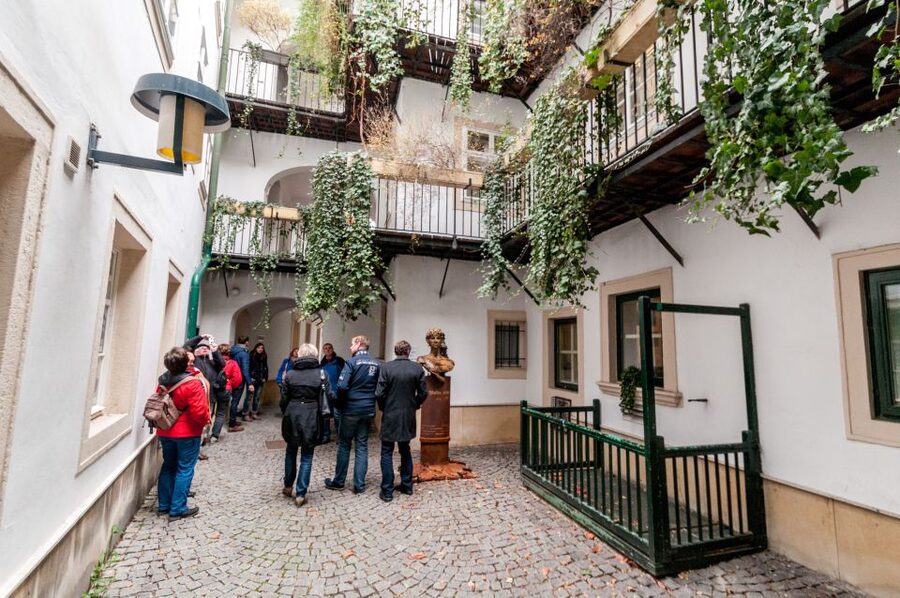
The final theme moves into Vienna’s narrow streets and back courtyards. Many lanes are winding, uneven, and far from the straight avenues associated with grand imperial planning.
These spaces offer a glimpse into the older city. The medieval street pattern developed over time rather than from one neat plan. Buildings pressed close together, and courtyards served practical household needs.
The tour uses the lanes to raise questions about everyday conditions in the Middle Ages. Sanitation was far less advanced than modern visitors may imagine, and even opening a window could have exposed residents to unpleasant smells and noise. The subject is slightly grim, but it makes the past feel more real.
Back courtyards are especially useful for understanding how the old town worked behind its public facades. A palace front might face a major street, while less formal spaces behind it served residents, workers, and merchants.
This part of the walk is also where a guide adds the most value. You may pass a plain entrance without realizing that it leads into a much older arrangement of buildings. The experience is less about checking off a famous monument and more about noticing how the city grew.
A private tour with room for questions
The price is $352 for a group of up to seven people. That works out to about $50 per person if you fill all seven places, which is a reasonable rate for a private two-hour guide in central Vienna. For two people, the same price becomes $176 per person, so the value depends heavily on your group size.
A private group is useful if you want to ask questions, set the pace, or keep the conversation focused on architecture, religion, local legends, or social history. It also avoids the feel of a large crowd moving from one landmark to the next.
The guide can be arranged in English, German, French, Spanish, Italian, Portuguese, Russian, Dutch, Chinese, Japanese, Arabic, or Korean. Some language requests should be made with the tour operator before booking, so do not assume every language is available at every start time.
The experience has received a 4.7 rating from 816 reviews, and the strongest praise centers on the guides’ personal delivery. Wolfgang Auinger is described as charming, interesting, and able to make the city appealing. Max is praised for clear presentation, motivation, and detailed knowledge of the old town, especially the area northeast of and behind the cathedral.
There is also a useful warning in the feedback. One person found the guide friendly but too talkative, with more Viennese humor than solid historical detail. That points to a real difference in expectations. If you want a formal lecture packed with dates, say so early. If you enjoy personality and local stories, the style may suit you better.
Timing, cost, and practical planning
Two hours is a good length for your first afternoon in Vienna. It gives you a quick orientation without using up half a day, and the route reaches areas you might skip if you followed only the city’s headline sights.
The walk is also a sensible choice near the start of a longer visit. Pay attention to the streets and districts you pass, then return later to the Jesuit Church, the Greek Quarter, or any courtyard that catches your eye.
There is no food or refreshment included. Plan a coffee or meal before or after the walk rather than expecting a stop built into the tour.
Cancellation is free up to 24 hours before the start, and you can reserve now and pay later. The starting time depends on availability. The meeting point is the Anchor Clock at Hoher Markt, 1010 Vienna, and you should arrive 10 minutes early.
The phrase skip the ticket line is less important here than on a major museum visit. This is mainly a guided city walk, and its value comes from access to interpretation and local context rather than from a long indoor attraction.
Who should book this Vienna walk?
I would choose this tour if you want to understand the old town beyond its most photographed buildings. It suits first-time visitors who want a fast orientation, repeat visitors who have already seen the major sights, and small groups who prefer a private guide.
It is also a good fit for anyone interested in architecture, Jewish and Greek connections, old university life, legends, and the practical shape of medieval streets. Families may enjoy the animal figures and stories, though the amount of historical explanation depends on the guide and your questions.
I would think twice if you want extended time inside churches, a food stop, or a tightly academic lecture. Two hours moves quickly, and the tour covers six themes rather than exploring one subject in great depth.
Should you book it?
Book it if your ideal Vienna walk includes side streets, courtyards, local stories, and architectural clues, not just the famous imperial sights. The best value comes when six or seven people share the private price, and the guide’s language and style match your group.
For a couple, the cost is harder to justify unless private attention matters to you. Still, the route offers a useful introduction to Vienna’s Greek Quarter, university district, legends, and older residential fabric. If you want a smart overview with a personable guide, this is a strong choice. If you mainly want grand palaces and cathedral interiors, spend your money on a different tour.
FAQ
Where does the tour meet?
The meeting point is the Anchor Clock at Hoher Markt, 1010 Vienna.
How early should I arrive?
You should arrive 10 minutes before the tour begins.
How long does the tour last?
The tour lasts two hours.
How much does the tour cost?
The price is $352 for a private group of up to seven people.
Is the tour private?
A private group is available, and the listed price covers up to seven people.
What languages are available?
Languages include German, Spanish, Chinese, Dutch, English, French, Italian, Japanese, Portuguese, and Russian. Group tours may also be available in Arabic and Korean. Contact the operator for another language request.
Is food included?
No. Food and refreshments are not included.
What parts of Vienna does the tour cover?
The route covers Hoher Markt, the Greek Quarter, the old university quarter, narrow streets, back courtyards, and areas showing Vienna’s architectural variety.
Can I cancel for a full refund?
Yes. You can cancel up to 24 hours in advance for a full refund.
Do I have to pay when I reserve?
No. Reserve now and pay later is available, so you can hold your place without paying immediately.
Just added around the world
- From Zadar: Romantic Sunset Sailboat Tour★ 5.0 · 5 reviews
- Zakynthos: Romantic Sunset Tour & the Legend of the Dragon★ 5.0 · 4 reviews
- Tenerife: Photography Sessions – Families, Couples, Friends★ 5.0 · 26 reviews
- Romantic Zadar Sunset and Night Coctails Cruise★ 4.8 · 25 reviews
- Zadar: Romantic Sunset Boat Tour with Champagne★ 4.9 · 11 reviews
- Weimar: Adventure Date, Walk with Quiz and Dinner for Couples★ 3.8 · 12 reviews
- YOUR HONEYMOON IN TUSCANY: Private Chianti Wine Tasting Tour★ 5.0 · 3 reviews
- Warsaw: Romantic Cruise with Prosecco–Birthdays & Proposals★ 5.0 · 2 reviews
Vienna Romantic Experiences, compared.
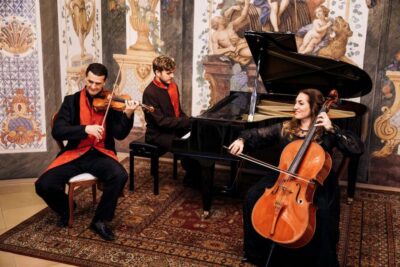
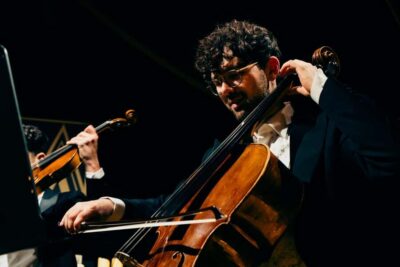
Romantic Classics Piano, Violin, and Cello Concert
Read our review →
Nuit des Lumières – The Candlelight Dinner Concert in Vienna
Read our review →
Wine Tasting in a 600 year historical wine cellar
Read our review →Browse the lists this tour appears in